Open-Source AI Is Winning Developers. It's Not Yet Winning Consumers.
Open-source AI models are a hit with developers, but mainstream users still flock to ChatGPT. Here's why distribution, polish, and UX are the missing pieces.
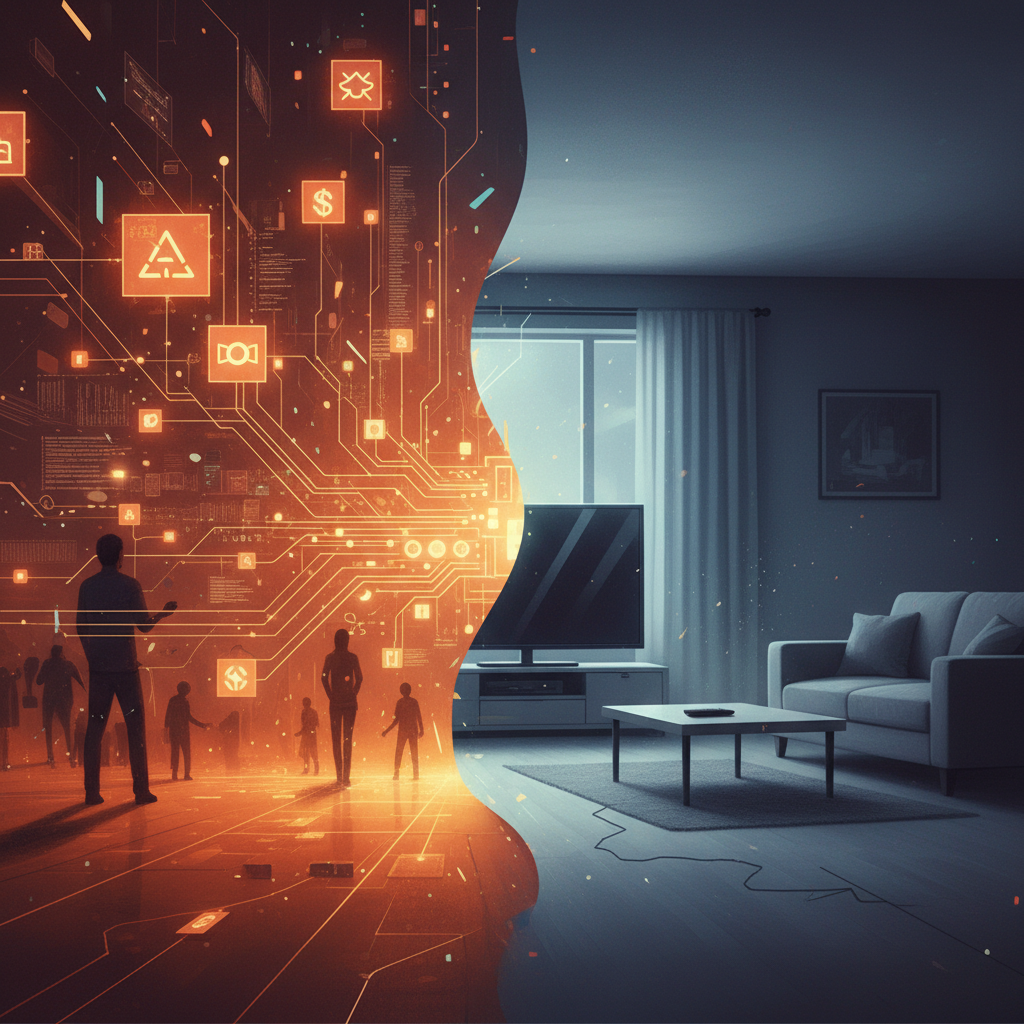
My MacBook's fans have been screaming for weeks. Not from buggy code or a runaway process, but from joy. I'm running quantized versions of Mistral, DeepSeek, and even Meta's new Llama 3 locally. As a builder and a writer in the AI space, my days are a blur of Hugging Face leaderboards, Discord servers buzzing with new quantization methods, and the sheer thrill of seeing what these open models can do. It feels like we're living in a Cambrian explosion of intelligence, where every week a new, more powerful model is released into the wild for anyone to grab, dissect, and build upon. The energy is electric, confined to a small but influential tribe of developers, researchers, and tinkerers like me. We believe we're on the bleeding edge.
Then I step outside my bubble. I was having chai with my cousin last week in Bangalore. He's a consultant, sharp as a tack, but not a developer. He was raving about how he used ChatGPT to plan a five-day itinerary for his parents' trip to Rajasthan. He didn't ask about the model architecture, the training data, or if it was open-source. He just said, "Rohan, it just works. It's magic." The "it" was ChatGPT. Always ChatGPT. My friends in Mumbai use it to rephrase emails to sound more professional. My aunt uses it to get recipes. For the ninety-nine percent of humanity not living on GitHub, AI is a single, monolithic brand: OpenAI.
So why this chasm? Why are the models devouring developer mindshare not making a dent in the consumer landscape? The first and most important answer is brutally simple: distribution. OpenAI has executed a masterclass. ChatGPT is a dead-simple URL. It has a slick, ubiquitous mobile app. It's now being baked into Apple's ecosystem. It's the engine behind Microsoft's Copilot, appearing in the operating system of a billion PCs. They didn't just build a model; they built a global distribution network for intelligence. Open-source has… what? A constellation of Hugging Face pages, complex GitHub repos, and UIs that look like they were designed by engineers, for engineers. It's a treasure hunt with no map.
This leads to the second point: polish. Using ChatGPT or Anthropic's Claude feels like driving a new luxury sedan. It’s smooth, quiet, and reliable. The interface is clean, the session history is seamless, and features like voice and image input are integrated gracefully. Using many open-source frontends, as powerful as they are, feels like assembling a kit car. It’s a thrilling project for the enthusiast who wants to get their hands dirty, but it's a nightmare for someone who just wants to get from point A to point B. Consumers don't want to know what "quantization" means or why they need to select a "sampler." They want the magic my cousin described, with zero friction.
We also can't ignore the bizarre psychology of brand trust. As a developer, I trust open source precisely because it's open. I can see the model weights, the community vets it, and there's a degree of transparency you'll never get from a corporate black box. But the average consumer thinks differently. To them, a brand like OpenAI, backed by the colossal might of Microsoft and featured on every news channel, feels *safer*. It has perceived accountability. Who do you complain to if a local Llama 3 instance hallucinates? Your terminal? For the non-technical user, the OpenAI brand offers a sense of security and reliability that a loose federation of developers, no matter how brilliant, simply cannot match. It’s the brand of a product, not the brand of a movement.
Furthermore, for the vast majority of consumer use cases, the free tier of ChatGPT is overwhelmingly, undeniably "good enough." Drafting an email? Planning a trip? Writing a birthday poem? The free models from OpenAI are phenomenal for these tasks. The marginal gain in quality you might get from a locally-run, fine-tuned Mistral model for a specific task is completely irrelevant to a normal user. The tiny improvement isn't worth the colossal leap in friction required to access it. Closed models won the "good enough" market first, and that's a powerful moat.
This whole situation gives me serious déjà vu. It reminds me of the great "Year of the Linux Desktop" that was perpetually just around the corner, but never arrived. For decades, Linux has been technically superior in many ways—stable, secure, flexible, and free. Yet, it remains a niche OS for developers and enthusiasts. Why? Because Windows and macOS had the distribution, the hardware partnerships, the application ecosystem, and the consumer-friendly polish. The average person didn't want to compile a kernel to get their Wi-Fi working; they just wanted to double-click an icon. Open-source AI today, with its array of incredible models from Mistral to Qwen, feels a lot like Linux on the desktop in 2005. Powerful, loved by a core group, but utterly invisible to the mainstream.
But there's a powerful counter-example: Android. What is Android? It *is* Linux. It's the single greatest success story of open-source conquering a consumer market. So, how did it succeed where the desktop failed? Google. Google took the powerful, open-source Linux kernel, built a highly opinionated, polished, consumer-ready operating system on top of it, and then solved the distribution problem with a ruthless, brilliant strategy of hardware partnerships. They gave Samsung, LG, and a hundred other manufacturers a world-class, free OS, creating a massive, instant ecosystem. They provided the sleek, "it just works" layer over the powerful, complex kernel.
This is precisely what open-source AI needs to crack the consumer market. It needs its "Android moment." It needs a company or a consortium to act as the "Google" of this story. Someone needs to take the best of these incredible open models—a Mistral for reasoning, a Llama for chat, a DeepSeek for code—and package them into a single, seamless, beautifully designed product. A product with a simple name, a polished app, and a clear value proposition for the end user, not just the developer.
What would this look like? It might not be a direct ChatGPT competitor at first. That's a frontal assault on a well-fortified beachhead. Instead, it could start with a niche. Imagine a truly private, on-device assistant that leverages open models to run entirely on your phone or laptop. No data sent to the cloud, ever. That's a powerful privacy-focused value prop that OpenAI can't easily match. Or perhaps an app built by a company here in India, hyper-focused on flawlessly handling a dozen regional languages and cultural nuances, using a fine-tuned version of a powerful open model.
The war for developer mindshare is swinging decisively in open-source's favour. The pace of innovation is breathtaking, and the freedom to build is intoxicating. But that is a different war than the battle for the consumer's home screen. To win that, technical superiority is table stakes, not the whole game. The winner will be the one who masters the boring-but-critical trifecta of distribution, polish, and trust. The open-source "kernel" for AI is ready and more powerful than ever. Now, the field is wide open for someone to build the "Android" on top of it. And as a builder in a country with a billion potential users and a deep well of tech talent, I can't wait to see who does it first.
Get the 50 AI Tools every Indian professional should know in 2026.
One email a week. Free PDF on signup. Unsubscribe anytime.
Why it matters
- 01Developer excitement for open-source AI hasn't translated to consumer adoption due to major hurdles in distribution, ease of use, and brand trust.
- 02Proprietary models like ChatGPT win with consumers because they are polished, easily accessible products, much like Windows dominated the desktop over the technically complex Linux.
- 03For open-source to win the consumer market, it needs an 'Android moment': a company to package the best models into a simple, polished product and solve the distribution problem.