Ars Asks: Share your shell and show us your tricked-out terminals!
The modern command-line interface is undergoing a renaissance, blending retro utility with high-end customization and performance-driven productivity.
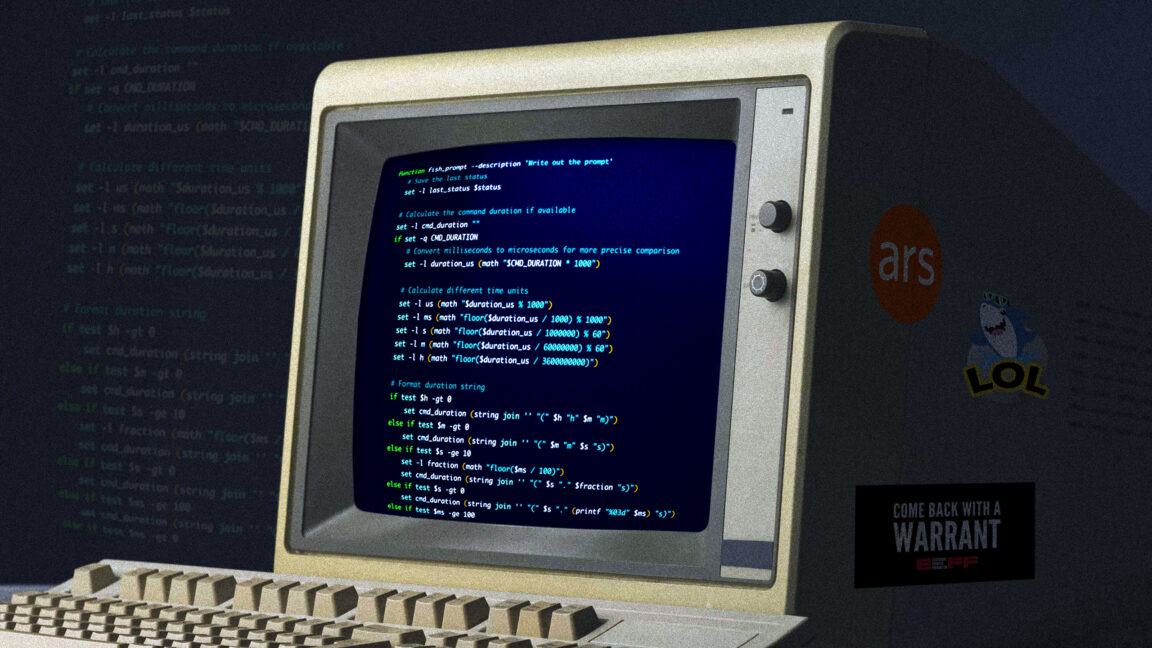
The command-line interface (CLI), once thought to be a relic of the mainframe era destined for obsolescence in the age of graphical user interfaces, is undergoing a profound cultural and technical renaissance. What began as a utilitarian necessity—a way to talk to computers via text—has evolved into a canvas for extreme personalization and high-performance workflow engineering. This shift is not merely aesthetic; it represents a deepening philosophy among developers and systems administrators that the terminal remains the most efficient, least distracting environment for complex computational tasks.
The roots of this movement stretch back to the early days of Unix, where the shell was the primary mode of interaction. For decades, the default experience remained relatively static: white or green text on a black background, typified by the Bash shell and basic terminal emulators like xterm. However, the last decade has seen an explosion in tooling. The rise of community-driven frameworks like Oh My Zsh, the development of modern shells like Fish and Nushell, and the emergence of fast, GPU-accelerated terminal emulators like Alacritty and WezTerm have turned the terminal into a sophisticated workspace that rivals modern IDEs in capability.
This evolution is driven by specific technical mechanics that prioritize "flow state" and ergonomics. Modern CLI setups frequently employ "dotfiles" management systems—version-controlled configuration files that allow users to port their entire work environment across machines instantly. Productivity-enhancing features such as fuzzy finders (fzf), syntax highlighting, and asynchronous auto-suggestions allow users to navigate deep directory structures or recall complex commands with a handful of keystrokes. By offloading UI rendering to the GPU and utilizing modern programming languages like Rust and Go, these tools ensure that the interface never lags behind the user’s thought process.
From a business and industry perspective, the "tricked-out terminal" reflects a broader trend toward developer experience (DX) as a competitive advantage. Companies like Microsoft have recognized this, investing heavily in the Windows Terminal and the Windows Subsystem for Linux (WSL) to lure developers back from macOS. Even cloud providers have pivoted, offering browser-based CLIs that attempt to replicate the richness of a local terminal environment. The market for terminal-based productivity is no longer a niche hobbyist pursuit; it is a central pillar of the software development lifecycle, influencing how tools are built, deployed, and managed.
The implications of this CLI revival extend into the realm of artificial intelligence. We are currently witnessing the integration of Large Language Models directly into the terminal prompt. Tools like GitHub Copilot CLI and various "shell completion" AI agents are transforming the terminal from a passive receptor of commands into an active collaborator. This shifts the barrier to entry; where once the CLI required memorizing arcane flags and syntax, natural language processing is making the power of the command line accessible to a broader range of technical professionals while supercharging the output of veterans.
As we look toward the future, the primary trend to watch is the tension between extreme customization and standardized "sane defaults." While power users will continue to craft bespoke environments with complex tiling window managers and Neovim configurations, the industry is moving toward "out of the box" shells that provide high-end features without the manual labor. Additionally, the convergence of the terminal with cloud-native workflows—where the local shell acts as a seamless portal to distributed compute resources—will likely define the next era of professional computing. The terminal is no longer just a window into the machine; it is a highly tuned instrument for navigating the global digital infrastructure.
Why it matters
- 01The command-line interface has evolved from a basic text utility into a sophisticated, high-performance workspace powered by GPU acceleration and modern shells like Fish and Zsh.
- 02Developer experience has become a major competitive battleground, prompting tech giants like Microsoft to prioritize terminal software to attract and retain technical talent.
- 03The integration of AI directly into the shell prompt is lowering the barrier to entry while fundamentally changing the CLI from a syntax-driven tool to a collaborative environment.